My maternal grandparents married in Sandy, Bedfordshire in 1923. There were no photos of the wedding, but a local paper described the happy event. Family photos and newspapers also provide insights into family life with nine children before they set up a hardware shop in South London. What kind of a picture do they show?
A church wedding
Nana Brown confirmed that no photos were taken when they married at Sandy Parish Church on 24 February 1923. Instead, we have this description from the local paper to bring the proceedings to life.

Elizabeth Sarah Fage, (who was also known as Beth and Lizzie), is described as the eldest daughter of William Fage, both of 13 Longfield Avenue, Sandy. Her husband Horace Brown, known as Harry, was the second son of the late C Brown and Lavinia Brown, of 9 Longfield Road. So they were fairly close neighbours. Beth’s best griend, and Horace’s sister, Emily Brown, and the bride’s sister Susan Fage, were bridesmaids.
The bridegroom’s best man was his brother, George Brown. The bride’s father, William Fage, who was also a witness, gave her away. It is good to know that they had an ‘entertainment’ for their guests afterwards, and that the presents were “numerous and useful”.
Biggleswade Chronicle, 3 March 1923
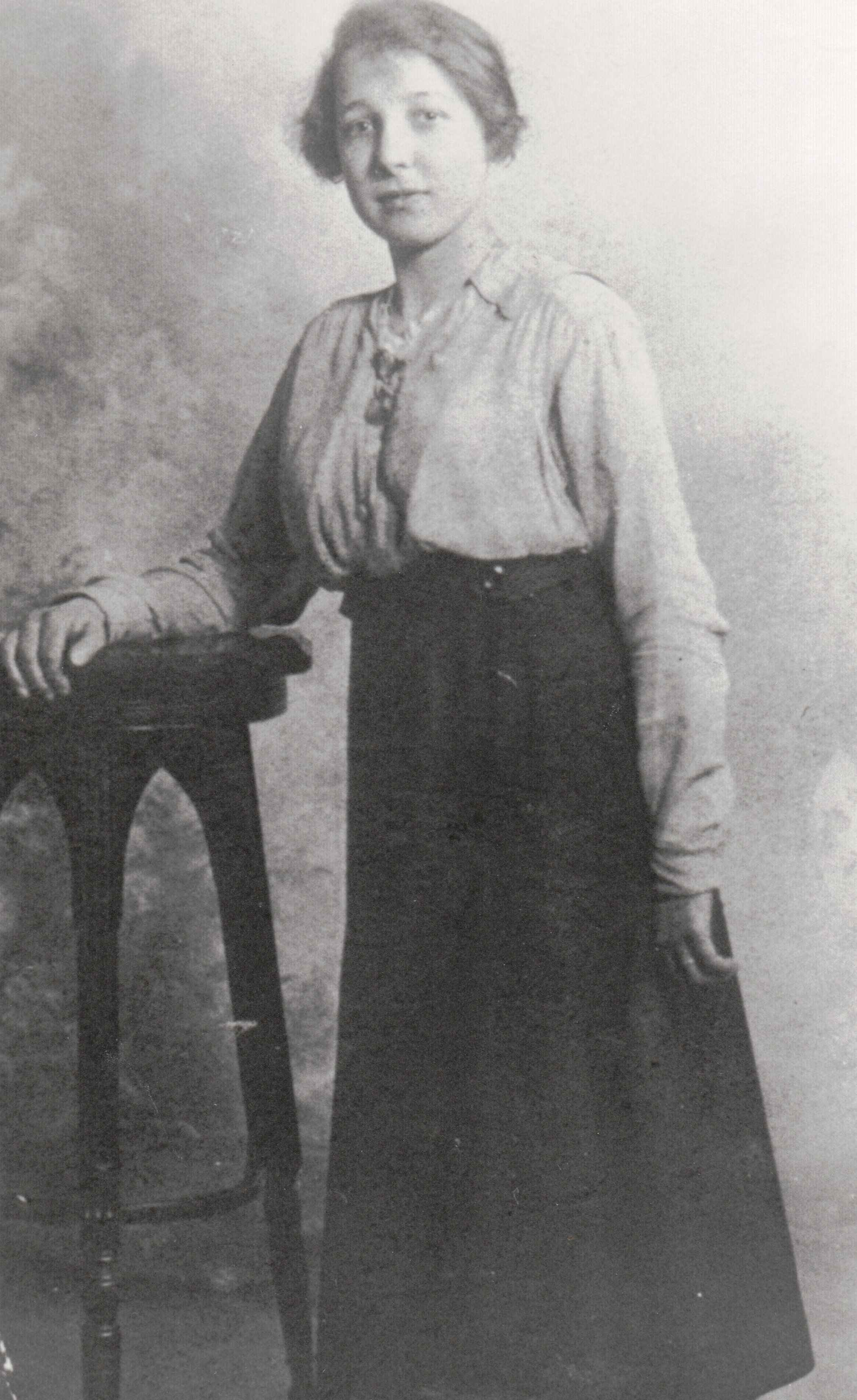
This photo of Lizzie may have been taken shortly after the wedding, as she appears to be in her early 20s, and is wearing what looks like a wedding ring.
Family life in Beds and Essex
They settled in Sandy and had five children there between 1924-1929, but by the time my Mum was born in 1930, they had moved to “The Dwellings”, Chadwell St Mary, Essex.
Having visited the small rural church at North Stifford in Essex where Mum and Dad married, I assumed Chadwell St Mary was a similar rural hamlet. However, when I searched for more information, I found a photo and other details that dispelled that idea.
The first recorded mention of Chadwell St Mary is in the Domesday Book (1086) when it is known as Celdeuuella meaning ‘cold spring’ according to Reaney’s Place Names of Essex. The appendage St Mary’s is merely to distinguish it from other places of the same name (Wikipedia). In 1931, the parish had a population of 16,825.
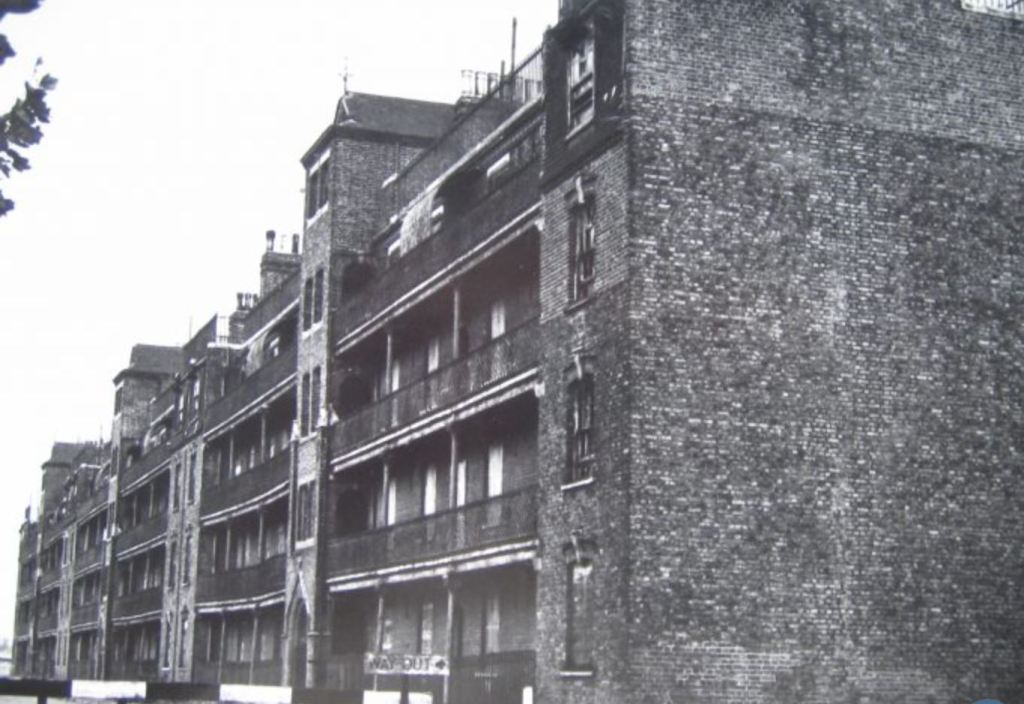
The Dwellings was a tenement block on the edge of Tilbury Docks, covered by the Chadwell district, and built in imitation of similar buildings in Liverpool, to house an increasing number of labourers. The 1911 and 1921 censuses (FindMyPast) suggest that each address had four rooms plus kitchen and services.
The Dwellings, Thurrock Museum via National Education Network
By the time The 1939 Register was taken, they were living at 21 Lytton Road, Chadwell St Mary, where Horace was working as a Carpenter and Joiner. Google Street View shows this as a semi-detached house with gardens on what looks like a purpose-built Council estate; it may well have been built before WW2.
Tilbury Docks were targetted by German bombers, and some of the older children were evacuated to Sandy to live with their parents’ families. By the time the War was over, they had moved to 48 Fairway, Stifford Clays, Grays, Essex. In 1948, when my Mum was 18, she seems to have acquired a camera, and we still have her numerous photo albums from this time until her marriage in 1952.
The photo on the left, below, shows Elizabeth standing outside the house in Fairway in 1948, when she was 47 and by then, a mother of nine. Google Street View shows little has changed since the photo was taken. The photo on the right was also taken of Horace and Elizabeth at Fairway around the same time.


By the late 1950s-early 1960s, they had moved to South London to set up a hardware shop at 68 Brockley Rise. They ran the shop with the help of their two unmarried sons, Harold and Michael, and the occasional help of other members of the family. I remember walking there with Mum pushing my brother in his pram or pushchair; it would have taken about an hour, via Mountsfield Park and Ladywell. Below are my grandparents and their nine grown up children, taken at Christmas 1959. I was born two months later, so I suppose I’m in the photo too!
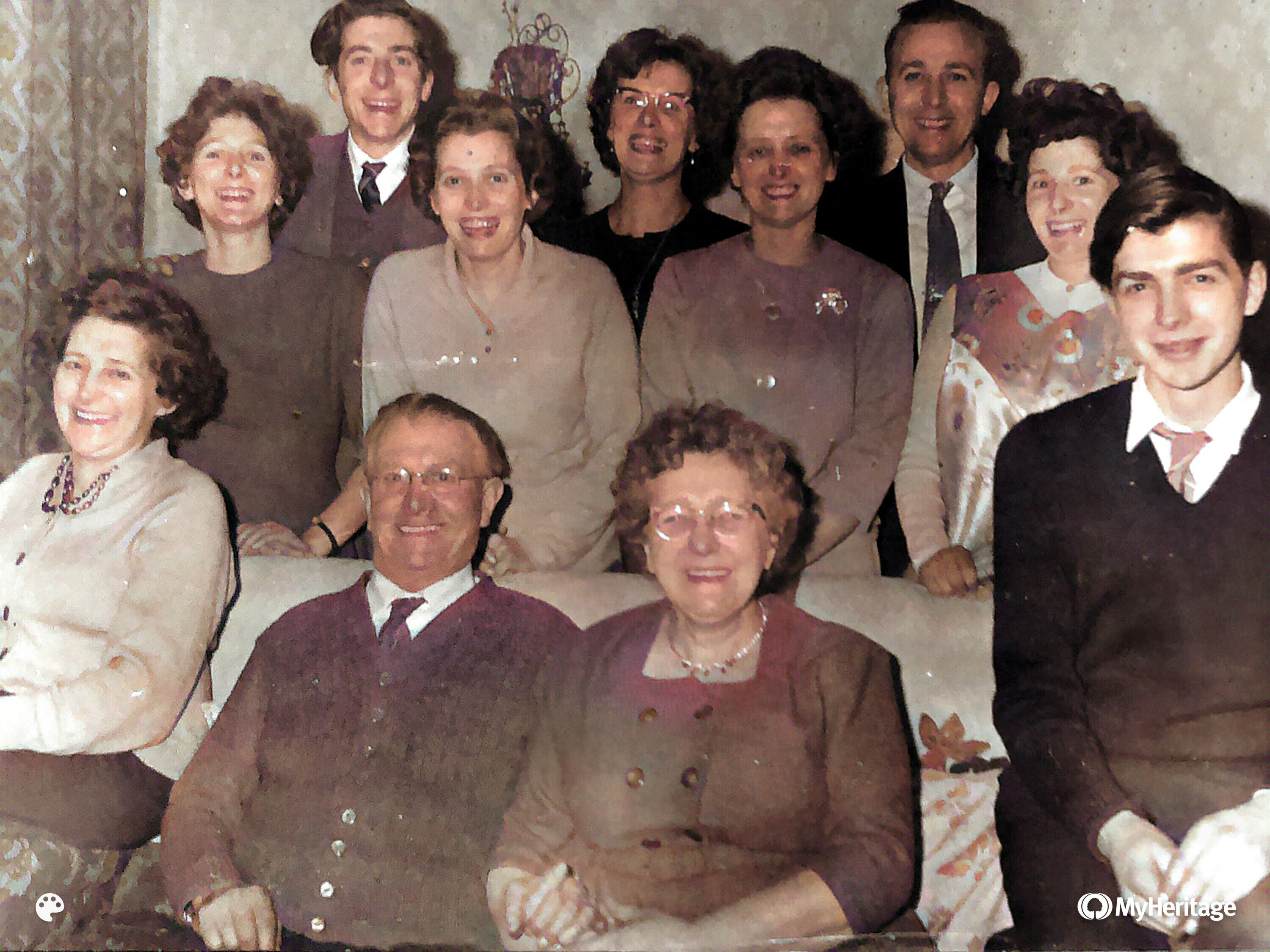
Family photo (colourised at MyHeritage). L-R back row: Evelyn, Harold, Brenda, Dorothy, Vera, Ron, Noreen. L-R front row: ‘Venny’, Horace, Elizabeth, Michael.
This photo shows Grandad Brown serving a customer in the shop. Look at all those old brand names and packaging on the shelves behind him! Lots of toilet papers and cleaning products, but on the left, the weights used to weigh out loose products, and what look like boxes of screws or nails.

Family photo of Horace Brown at the shop at 68 Brockley Rise, c.1960s
The shop had living quarters to the rear – a dining room and kitchen – and a lounge, bedrooms and bathroom upstairs. Out the back were kennels for the spaniel-type dogs they used to keep.
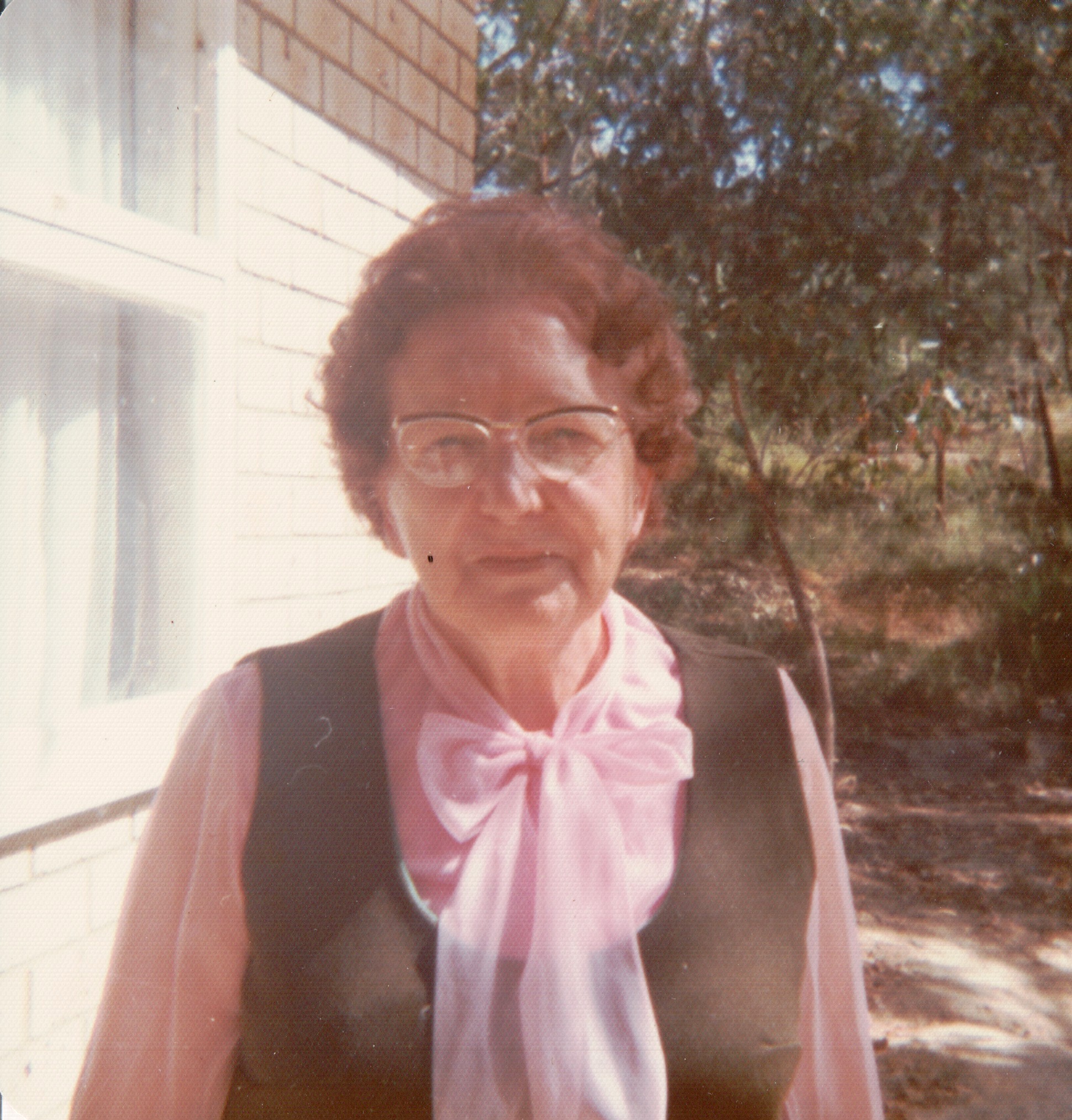
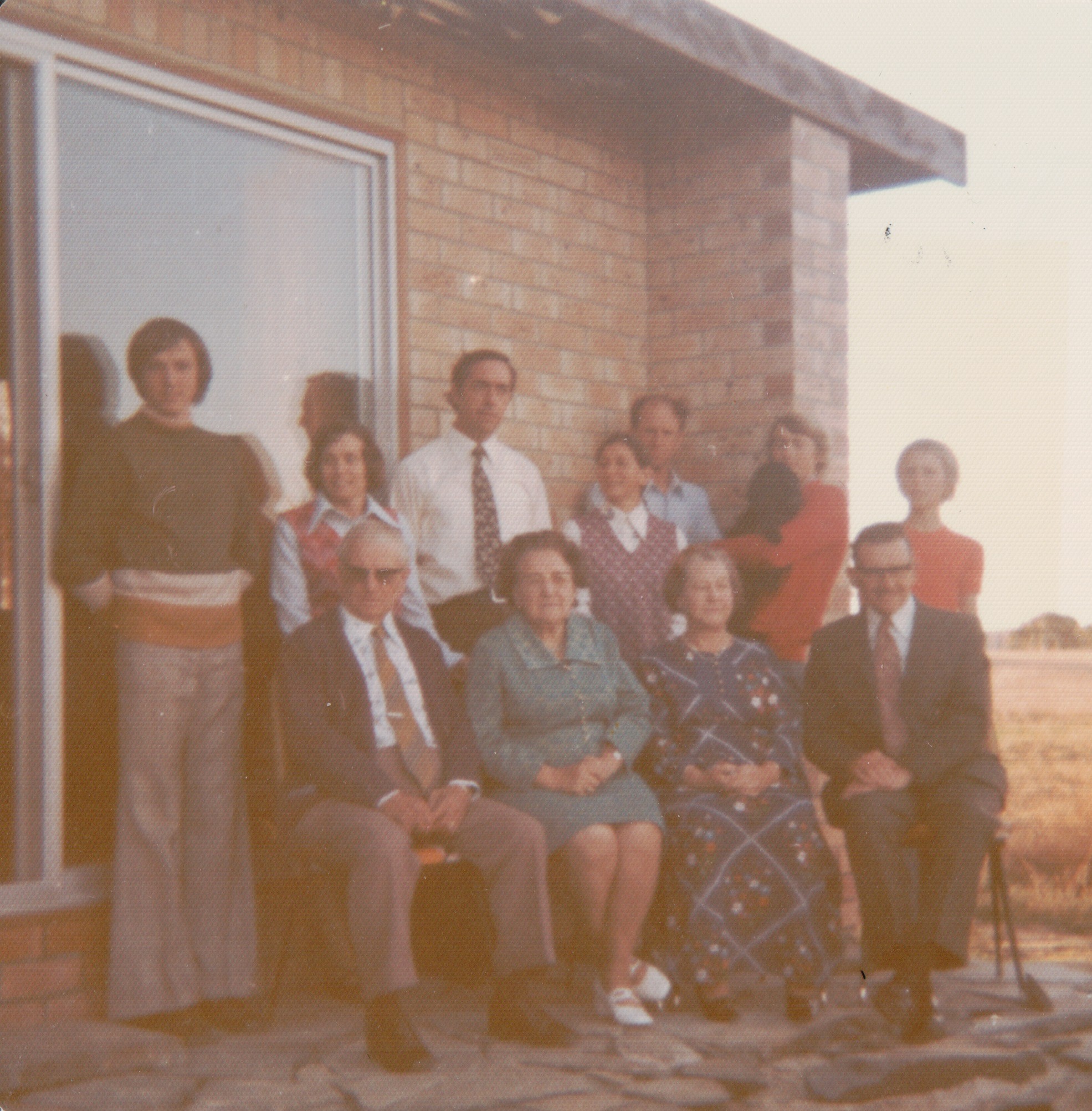
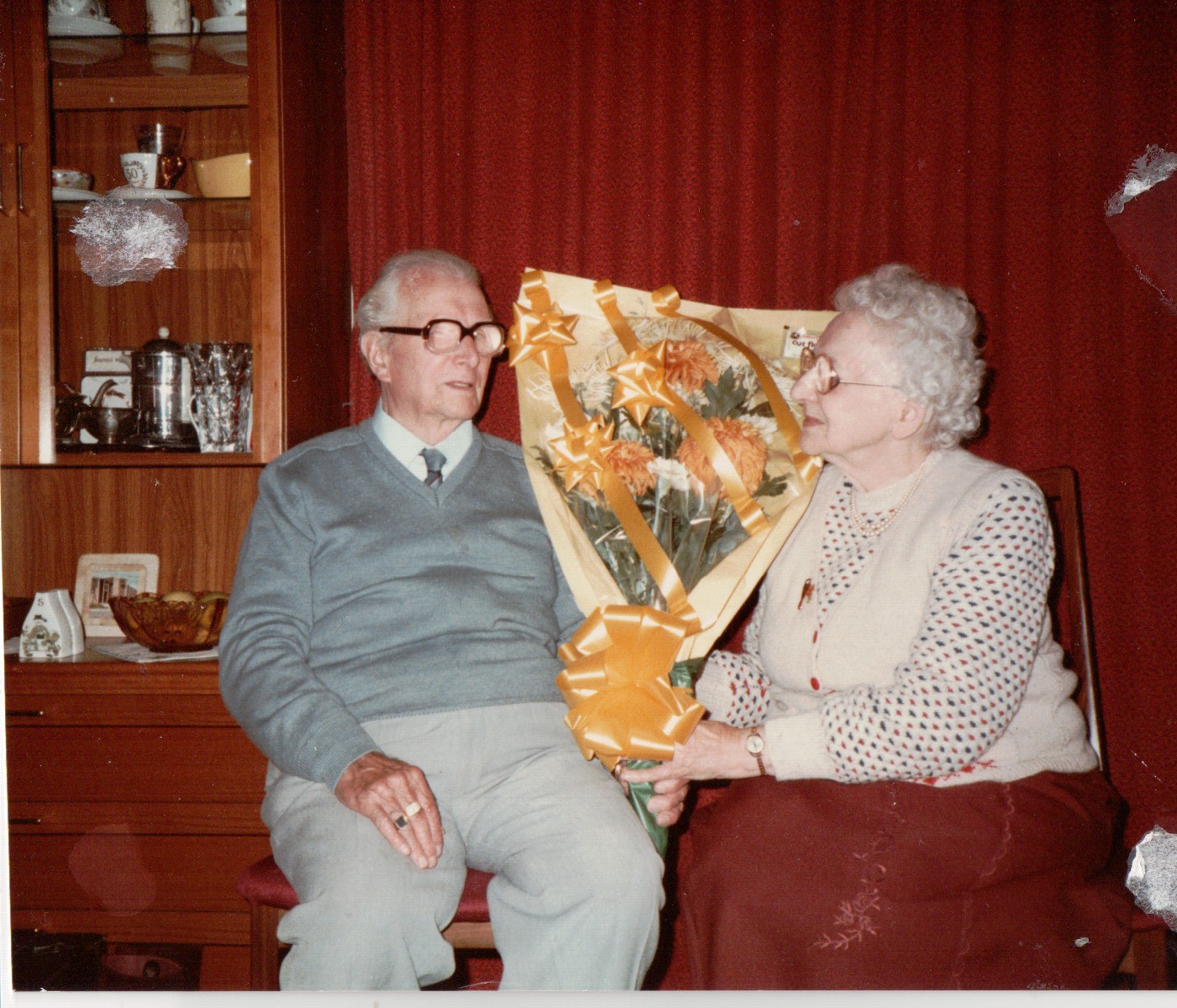
Their two youngest daughters Evelyn and Brenda emigrated to Australia with their husbands and young children on an assisted passage scheme, settling in the hills above Adelaide. My grandparents travelled to Australia many times to visit, sometimes on their own, sometimes with Harold or Michael, well into their 80s. The first three photos were taken on a visit in January 1976. The last one was taken in 1985, on their return from another trip.
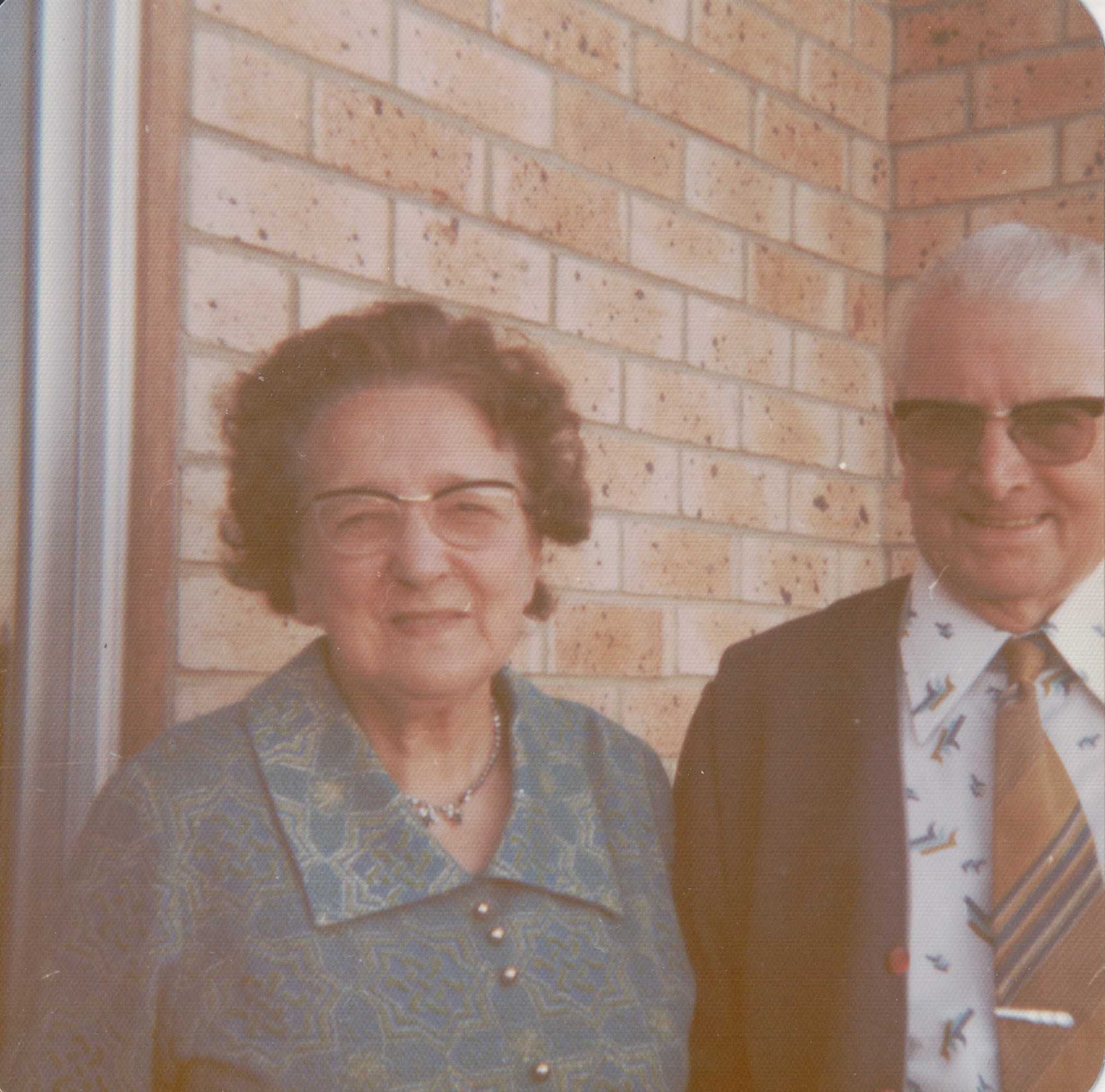
Horace and Elizabeth retired in their late 80s/early 90s, and moved to Pinchbeck, near Spalding in Lincolnshire, not far from where I now live. Nana lived to be over 100; but that’s another story.
Main Sources:
- Family stories
- Family photos
- British Newspaper Archive via FindMyPast
- Wikipedia
- Google Street View
 My Stocking Roots